
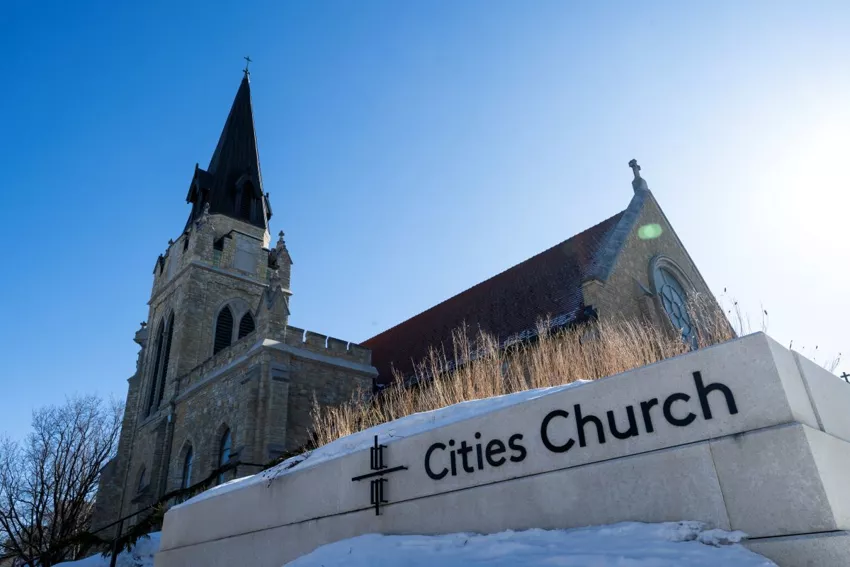
4 states cracking down on worship service disruptions after the Cities Church storming
May 29, 2026
Four states have adopted new laws this year increasing the penalties for disrupting worship services after a Jan. 18 protest in which a loud group entered the Cities Church in St. Paul, Minnesota, interrupted the sermon and brought the service to a halt.
The Christian Post reports that the Minnesota church service was targeted in January over one of its pastors’ working with U.S. Immigration and Customs Enforcement (ICE).
Federal prosecutors charged the protestors under the Freedom of Access to Clinic Entrances Act, or FACE Act, which includes protections for houses of worship against physical intimidation.
The January protest has prompted four states to adopt stronger protections for churchgoers as a result.
In March, Idaho Gov. Brad Little signed Senate Bill 1296, which created a specific criminal trespassing offense for entering or remaining on church property without permission.
Idaho House lawmakers also passed House Bill 615 earlier this year, making it a misdemeanor to “maliciously and willfully” disturb or delay a religious gathering.
Meanwhile, Louisiana Gov. Jeff Landry signed two laws intended to shield congregations from similar disruptions — House Bill 294 and House Bill 68.
HB 294 strengthens existing trespassing laws, making it easier for churches, synagogues and other houses of worship to remove trespassers from their property while HB 68 expands the legal definition of disturbing the peace to include disrupting worship services.
According to the Christian Post, earlier this year, the Oklahoma Senate advanced Senate Bill 743 which aims to protect free speech and assembly rights while establishing parameters to protect churchgoers during worship services.
Gov. Kevin Stitt signed the bill into law in February 2026.
In April, Kansas Democratic Gov. Laura Kelly announced that Substitute for House Bill 2018 would become law without her signature.
That bill created “the crime of interference with the conduct of a religious assembly, providing criminal penalties therefor and providing for a civil cause of action for damages.”
Governor Kelly had expressed concern that “This bill is born out of a tension between two fundamental rights: the right to freely practice religion and the right to freedom of expression.”
Kelly added, “This legislation addresses this tension in a manner that prioritizes one of these rights over the other and will result in costly litigation.”
Photo: top, Credit: Stephen Maturen/Getty Images