
Alabama Enacts ‘Released Time’ Law Allowing Students Off-Campus Religious Instruction
April 17, 2026
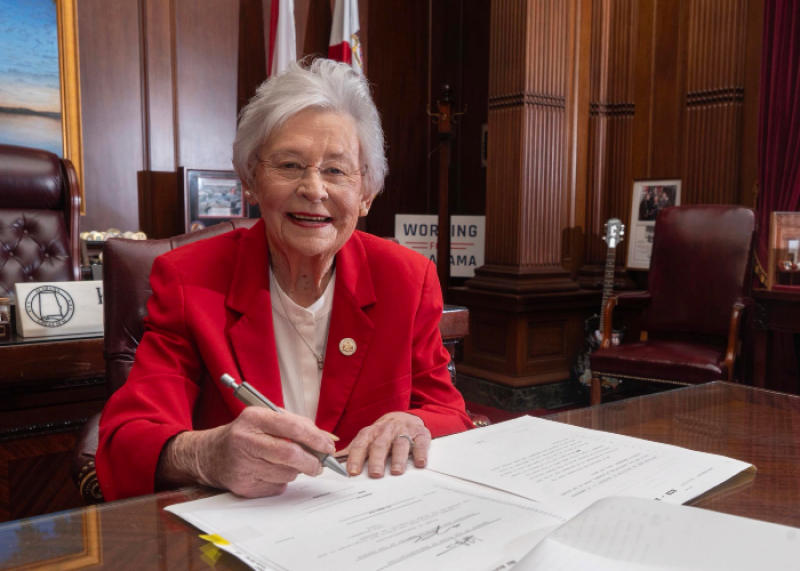
Alabama Governor Kay Ivey has signed a new law allowing public school students to leave campus during the school day to participate in religious instruction, a practice known as “released time.”
Christianity Today reports that Senate Bill 248, also known as the Alabama Released Time Credit Act, was enacted into law last Wednesday, formally authorizing the program statewide.
The law states: “The State Board of Education and each local board of education shall allow a parent or guardian to choose for his or her student to attend a religious released time program conducted by a sponsoring entity.”
The legislation also clarifies that “Released time instruction and activities are not sponsored by the local board of education and do not fall under the supervision, control or authority of the local board of education or its employees.”
Under the statute, school officials have limited authority to block participation if there is “a reasonable belief based on objective evidence that permitting a student to attend a released time program would pose a substantial risk of physical harm to the student or that the sponsoring entity is in violation of state law in a manner that poses a substantial risk of physical harm to a student.”
According to Christianity Today, the act emphasizes neutrality toward religion, stating, “Nothing in this section shall be construed to … endorse any religious belief, practice, or instruction by the State Board of Education or any local board of education [or] limit the authority of local boards of education to tailor the policies addressed in this section to meet their specific needs.”
Legal backing for the law goes back to 1952, when U.S. Supreme Court ruled in Zorach v. Clauson that released time initiatives are constitutional, declaring there is “no constitutional requirement which makes it necessary for government to be hostile to religion and to throw its weight against efforts to widen the effective scope of religious influence.”
The Court added, “When the state encourages religious instruction or cooperates with religious authorities by adjusting the schedule of public events to sectarian needs, it follows the best of our traditions.”
Photo: top, Credit: Facebook/Governor Kay Ivey