
Lost Pages of Apostle Paul’s Letters Recovered, Offering Insight Into Early Christian Scripture
April 30, 2026
An international team of scholars is bringing to light how early Christians engaged with biblical texts after recovering dozens of previously lost pages from one of the earliest New Testament manuscripts.
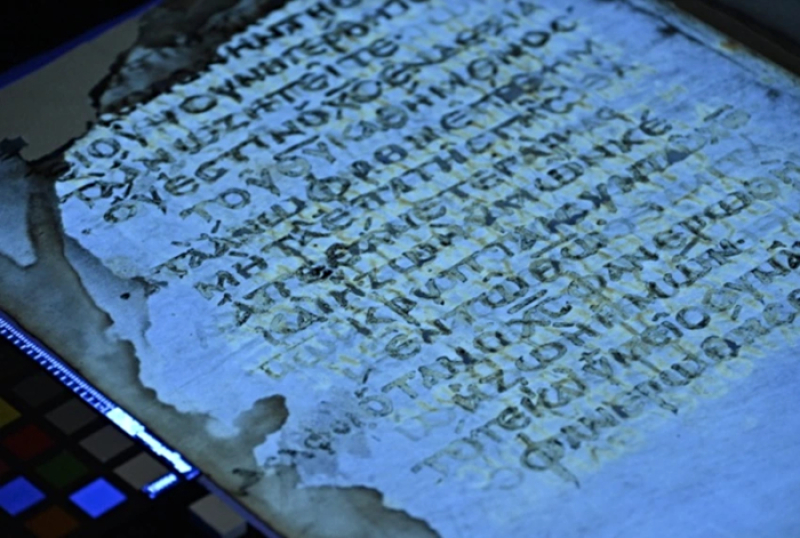
Christianity Today reports that the scholars, led by the University of Glasgow, successfully recovered 42 missing pages from Codex H, a sixth-century Greek manuscript containing the writings of Paul the Apostle, according to a university announcement.
The manuscript, also known also as GA 015, was taken apart in the 13th century at a monastery on Mount Athos, where its parchment leaves were reused as binding material for other volumes.
According to Christianity Daily, over time, the remaining fragments became dispersed among various European collections, with many sections thought to be lost permanently.
The recovery was made possible through a process that allowed researchers to detect faint ink impressions left behind when pages were repurposed, making it possible to reconstruct text that had remained hidden for centuries.
Among the discoveries are early forms of chapter divisions for Paul’s letters that differ notably from those used in modern Bibles, as well as how scribes edited and annotated texts in early Christian communities.
Professor Garrick Allen of the University of Glasgow said, “Given that Codex H is such an important witness to our understanding of Christian Scripture, to have discovered any new evidence — let alone this quantity — of what it originally looked like is nothing short of monumental.”
Researchers worked with specialists in Paris to confirm the manuscript’s age using radiocarbon dating to verify that the parchment dates to the sixth century.
The study also collaborated with the Early Manuscripts Electronic Library and had additional cooperation from the monastery that continues to preserve portions of the manuscript
Photo: top, Credit: University of Glasgow/Damionos Kasotakis