
Riley Gaines warns potential Supreme Court victory won’t end battle to protect women’s sports
January 15, 2026
Former collegiate swimmer Riley Gaines and other female athletes are hoping that the U.S. Supreme Court will side with “common sense” and “truth” by upholding bans on gender-confused male athletes competing in women’s sports.
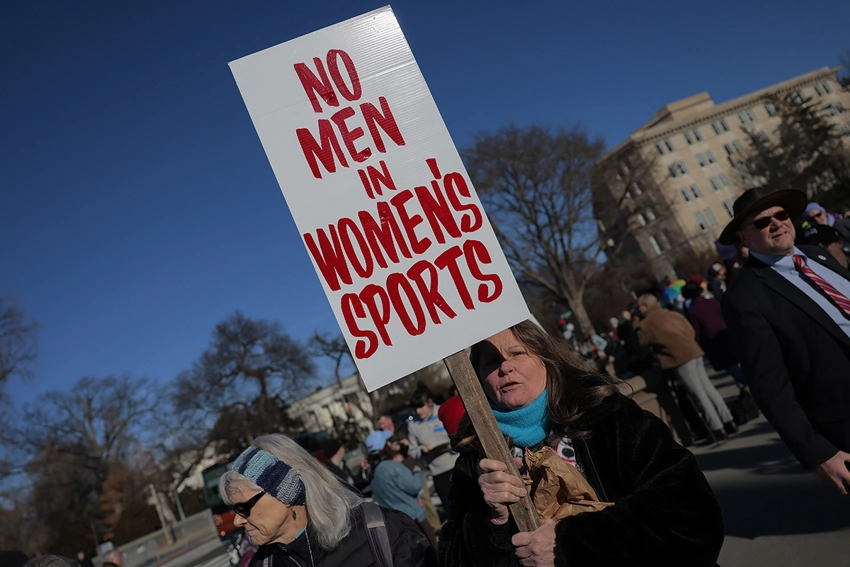
The Christian Post reports that Gaines was among a number of athletes and advocates who gathered outside the nation’s highest court on Tuesday as justices heard oral arguments in the cases of Little v. Hecox and West Virginia v. BPJ.
The two cases, challenging state bans on biological male athletes competing in women’s sports in Idaho and West Virginia, brought supporters and opponents of the law together outside the Supreme Court for dueling rallies.
Gaines, who is among the most well-known critics of policies allowing biological male athletes to compete in women’s sports, sought to clarify misconceptions the public might have about the two cases.
Gaines warned, “Even with a favorable ruling, I will tell you, it’s not enough Understand that the cases that are being heard are not to decide if states must protect us as women, if we must have rights to equal opportunity, to privacy and to safety. That’s not what it is. It’s if states even can. It’s the bare minimum that we’re fighting for.”
According to the Christian Post, besides Idaho and West Virginia, others states have passed similar laws or regulations protecting women athletes, including: Alabama, Alaska, Arizona, Arkansas, Florida, Georgia, Indiana, Iowa, Kansas, Kentucky, Louisiana, Mississippi, Missouri, Montana, Nebraska, New Hampshire, North Carolina, North Dakota, Ohio, Oklahoma, South Carolina, South Dakota, Tennessee, Texas, Utah, Virginia and Wyoming.
Should the court rule against state laws in Idaho and West Virginia, the decision would likely affect those other states that have prohibited biological males from competing against female athletes.
Other female athletes who spoke at the rally shared their experiences of being forced to compete against and share locker rooms with men who claimed to identify as female.
A decision from the Supreme Court isn’t expected until June.
Photo: top, Credit: Heather Diehl/Getty Images